|
SEARCH My Blog (Opens in new tab)
Your weak hip muscles are costing you running efficiency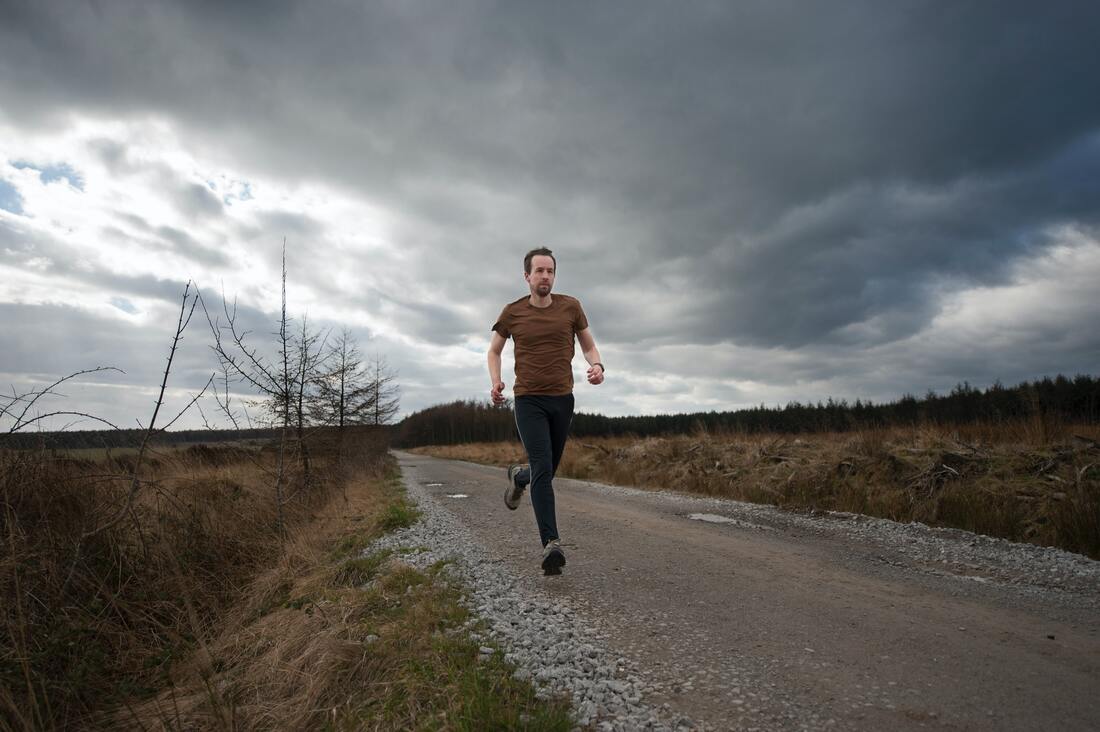 Photo by Jenny Hill on Unsplash Judging by the number of other runners who ask me what I am doing, it's apparent that warming up, warming down and stretching our hip flexors is a bit of a lost art. That's unfortunate, and not just for runners. I do a simple couple of hip flexor warm-ups and warm-downs, which I recommend for all runners. It's attention to these kinds of movements that has enabled me to run every day ~5km for nearly 300 days injury-free. Hip mobility is essential for everyone and runners in particular. (When running we use our hip flexors, especially the iliopsoas, to lift the leg with each stride.) With running, hip flexors can suffer from muscle weakness and muscle tightness, causing tenderness and pain. The other movement I am always asked about is when I warm-up or stretch my soleus muscle. The soleus from directly behind the knee to just above the muscles around the ankle. I injured it once. I don't want to have that happen again! Hip flexors - the engines of our movementOur hips connect to every part of our body, and when they're not moving well, there's a chain reaction of restriction. You can't squat easily, your hamstrings start to feel tight, and you compensate with specific movements when you walk that cause your back to start tightening up and eventually manifest in lower back pain. In fact, some physiotherapists considered hip flexors to be the engine of our bodies:
And that's really and an indication of why hip mobility for runners, is so important. When it's missing, your options to adjust and compensate safely to different conditions is restricted. Here I am talking about your physical condition on a specific day - how much strength and energy you have, and what's nagging you physically. I am also talking about track and running conditions, and your ability to get into an efficient gait, avoid roots rocks and dogs, and to maintain an efficient running posture. All the above, and much more, are compromised if your hip flexors are not in good condition. Weak hip flexors - higher energy needed for runningLet's look specifically at running efficiency. A 2018 study examined how the neuromuscular components the knee and hip affected running efficiency. It notably measured the strength-balance-ratio between knee muscle strength and hip muscle strength. In most people, the hip muscles are chronically weaker than their knee muscles. That is a fundamental problem for runners because hip muscle strength is a vital contributor to running performance on level or hilly ground. However, the relationship between running economy and unbalanced weak hip flexors was until, this time, unknown. The study determined that unbalanced, weak, hip flexor muscles contributed to a higher energy running cost than balanced hip to knee muscle strength. The researchers concluded: "Given that the functional balance ratio was associated with a better running economy, coaches and athletes should consider implementing a specific strengthening program for hip flexor muscles to increase the functional ratio". Two easy hip flexor strength and flexibility movementsSo let's get to it, and you'll be able to run further, pain-free. My movements below are dual-purpose. They can good for warm-up movements - without long holds - and as warm-down stretches, incorporating holds of 20 seconds or so. I use them in this way. To be clear, this is not a warm-up or warm-down sequence; it is just a couple of the movements that you should be doing. My everyday warm-up takes about 15 minutes, and warming down about 10 minutes. When was the last time you practised the squat pattern with a full range of motion at the hips? Chances are it's been a while, even if you are an active runner who trains, stretches and even spends a few minutes on a foam roller now and then. In "less advanced" cultures, and in many advanced cultures today, the deep squat was a staple of human movement. People naturally moved into deep squat positions in social settings to de-load the spine, improve hip mobility and create more pain-free function throughout their body. #1 How to do a wide-deep squatThe deep squat is a simple basic movement. First, try the movement, and then note the variations between the warm-up version and the warm-down stretch. Follow these steps:
If you find it hard to get low between your legs, you are probably squatting with an incorrect foot position. Fix this by getting into the deep squat position, and then move around a little. Scoot your feet in and out, and determine which width and toe angle feel best in your hips, back and pelvis. The position should allow you to get your butt as close to the ground as possible. For warming-down, stretching, hold this lower pose for 20 - 30 seconds then slowly release back to standing position. I do 60 seconds, but it is not necessary, I simply enjoy it as a resting position after running. As a dynamic movement for warming-up, wait momentarily in the low position, push your knees out gently with your elbows, and then gently rise - in a controlled way - to the starting position. Repeat the movement 5 or 10 times. #2 Squatting internal rotationsNow that you are doing the deep squat here is a bonus - another dynamic movement. This movement encourages blood flow and circulation - perfect for before or after running. As a warm-up, don't hold the end position very long at all. Just keep moving and give yourself some time to work through the movement without any pain. As a warm-down, hold the extended position for a few seconds. Here's the routine:
If you are like me, you'll enjoy the feeling of getting mobility your hips. Do the movement slowly, and through a pain-free range of motion. Your range of motion will improve over time. Smoothly and coordinated - no rushThese movements, when executed properly, provide bang for your buck in preparing you for running, and in warming down afterwards. Spend the time to get the feel of them, and then enjoy the mobility and control you develop. Make sure you can perform the movements, moving in and out of the deep squat positions smoothly and in a coordinated fashion - pain-free. Don't rush, but try to make it as smooth as possible while improving your range of motion with each rep. Stronger, faster, more efficient runningFlexible and strong hip flexors will help keep your hip and knee joints properly aligned and prevent sudden twisting of the knee during side-to-side movements, sharp turns, and side-steps. Additional complementary exercises like Romanian deadlifts, kettlebell swings, and hip thrusts will strengthen your posterior chain, which will further help your running performance and prevent pain. But, with no more than these two movements alone incorporated into your warm-ups and warm-downs you will improve your running efficiency. That's always worth doing. Good luck #GoodRunning > More posts to help you with EXERCISES > More posts to help you with DIABETES > If you are a @MEDIUM reader my publication Body Age Buster has hundreds of categorised posts which I have written especially for men and women over 50 Follow me on Quora for more health and fitness tips.
If you valued this article >> Follow me Leave a comment >> Share it >> Stay healthy If you have any questions email me and I will get back to you |
ChoicesSince I was diagnosed at 50 with Type 2 diabetes I've been learning how to do bone-building fitness training which lowers my age. You can too. It's your choice. Walter Categories
All
Archives
May 2023



My 300 Health And Fitness Answers On Quora

⭑Medium Top Writer on Food⭑
|
 RSS Feed